BOIAN-GUMELNIȚA CHALCOLITHIC POTTERY, A technological and functional approach
PREȚ 149,00 lei Prețul inițial a fost: 149,00 lei.134,10 leiPrețul curent este: 134,10 lei.
Secretele ceramicii de acum 7000 de ani, dezvăluite prin știință
Vasele de lut descoperite la Sultana, Gumelnița și Vidra ascund povești fascinante despre meșteșugarii calcolitici. Cum alegeau argila? Cum modelau formele complexe? La ce temperaturi ardeau ceramica?
Dr. Vasile Opriș combină analiza de laborator cu arheologia experimentală pentru a răspunde acestor întrebări. Rezultatul: o reconstructie completă a tehnologiilor ceramice Boian-Gumelnița, susținută de date arheometrice și experimente practice de replicare.
O lucrare de referință care transformă ceramica din simplu indicator cronologic în fereastră către viața cotidiană a comunităților preistorice.
Descriere
Cum era produsă ceramica acum 7000 de ani în sudul României? Ce tehnici foloseau meșteșugarii calcolitici? Cum selectau argila, ce temperaturi de ardere aplicau și cum erau utilizate vasele în viața cotidiană?
BOIAN-GUMELNIȚA CHALCOLITHIC POTTERY oferă primul studiu interdisciplinar complet dedicat tehnologiei și funcționalității ceramicii din culturile Boian și Gumelnița, reprezentative pentru Calcoliticul timpuriu și mijlociu din sudul și sud-estul României (mileniul V î.Hr.).
O abordare inovatoare
Spre deosebire de studiile tradiționale care se concentrează pe tipologie (forme și decoruri), dr. Vasile Opriș propune o metodologie revoluționară care integrează:
- Analiza macroscopică detaliată a assemblajelor ceramice complete
- Metode arheometrice de ultimă generație (microscopie optică, analize fizico-chimice)
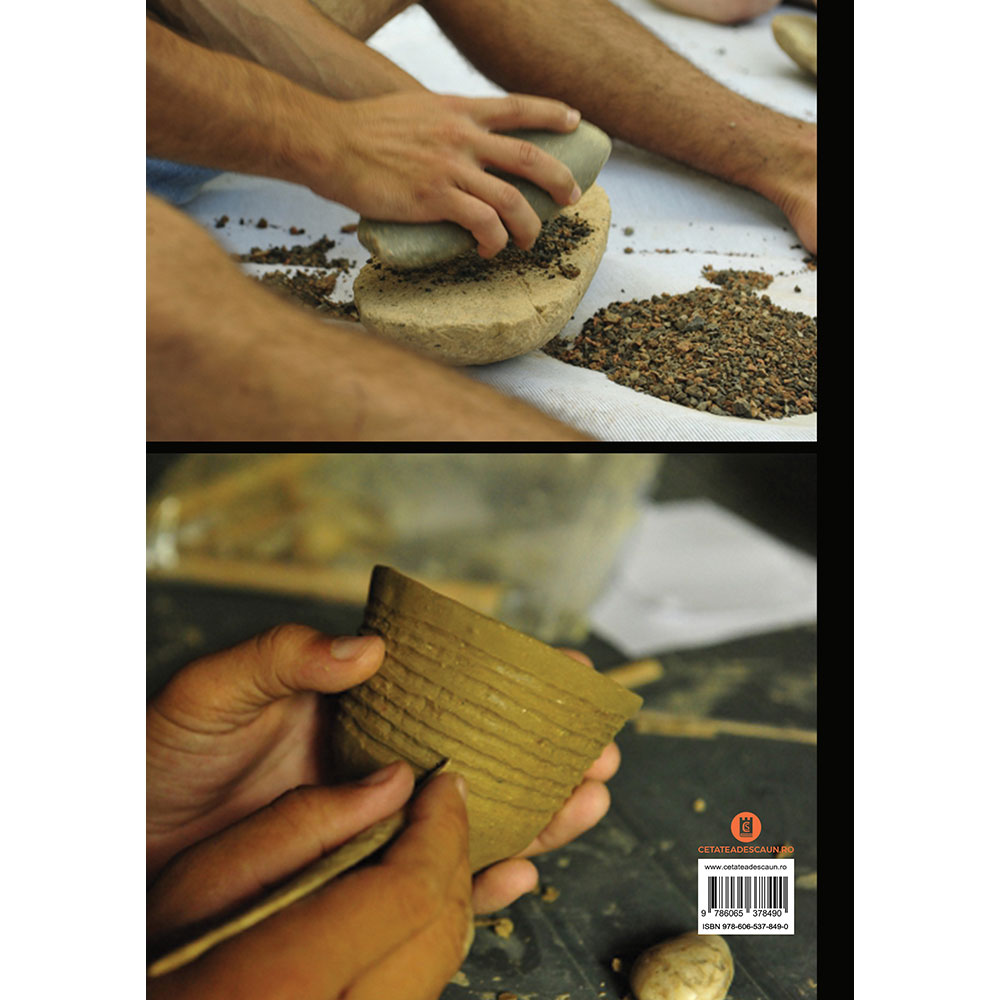
- Arheologie experimentală – reconstituiri practice ale tehnicilor de producție
- Studii de funcționalitate – ce arată urmele de uzură despre utilizarea reală a vaselor
Conținut științific riguros
Volumul este structurat în șase capitole care acoperă:
Cap. I – Cadrul general al studiului
- Context crono-cultural al Calcoliticului din sudul României
- Caracteristicile ceramicii Boian și Gumelnița
- Distribuție geografică și datare
Cap. II – Tehnologia și funcționalitatea ceramicii: aspecte teoretice
- Istoria cercetării ceramicii arheologice
- Tehnologie de producție și expresii sociale
- Funcțiune și utilizare
Cap. III – Metode analitice
- Analiza macroscopică (pastă, tehnici de modelare, ardere, forme)
- Metode arheometrice pentru ceramică și pigmenți
- Arheologie experimentală
- Criterii de determinare a funcționalității
Cap. IV – Ceramica calcolitică Boian (cel mai substanțial)
- Studii de caz de la Crețuleasca, Berceni-Sit12, Gumelnița-Terasă, Sultana, Nanov-Vistireasa 3, Teleor
- Analiză detaliată a pastei ceramice
- Tehnici de modelare (ipoteze vechi și noi, verificate experimental)
- Finisarea suprafeței și decorarea
- Pigmenți albi și roșii – rezultate arheometrice
- Tehnici de ardere și temperaturi
- Funcționalitate și utilizare – analize reziduale
Cap. V – Ceramica Gumelnița
- Assemblaje de la Sultana-Malu Roșu și Gumelnița
- Pasta ceramică – analiză la nivel de sit și regional
- Tehnici de producție
- Finisarea suprafeței (slip, barbotină)
- Decorare
- Ardere (structuri, tipuri, temperaturi)
- Funcționalitate
Cap. VI – Sinteză și discuții
- Surse de argilă
- Rețete de pastă
- Tehnici de formare
- Tratamente de suprafață
- Tehnici decorative
- Condiții și temperaturi de ardere
- Concluzii
Materiale studiate
Cercetarea se bazează pe analiza directă a assemblajelor ceramice complete din contexte
This volume, Boian-Gumelnița Chalcolithic Pottery. A Technological and Functional Approach is much more than a reworking of a doctoral dissertation. It is the result of a long and coherent research trajectory, pursued with seriousness, intellectual curiosity, and methodological consistency over many years. Based on his doctoral thesis (2017), Vasile Opriș has now published an updated English version of this book, which brings together the results of his sustained investigations into Chalcolithic pottery technology, archaeometry, functionality, and experimental archaeology, developed within several research projects.
I have known Vasile Opriș since 2008, when he first joined the Sultana excavation. From the start, he combined patience, precision, and genuine enthusiasm. These qualities have deepened through fieldwork, careful study of materials, and a persistent interest in questions beyond traditional ceramic analysis. For over 15 years, he has been a leader in prehistoric pottery studies in Romania.
What distinguishes his work is not only his choice of subject but also his approach. In a research tradition that has often treated pottery mainly as a chronological or typological marker, Vasile Opriș consistently seeks to understand it as a complex social and technological product. His studies go beyond form and decoration to address the chaîne opératoire of ceramic production, including choices in clay selection and tempering, vessel forming techniques, surface treatments, firing conditions, and the intended and actual uses of pottery. In doing so, he contributes to a broader understanding of the human communities that produced and used these clay objects during the 5th millennium BCE.
Another major merit of this volume is its methodological openness. It unites archaeological observation, contextual and stratigraphic analysis, archaeometric investigation, and experimental archaeology in a productive way. This combination is not merely formal; it reflects a genuine effort to link the archaeological record with analytical methods that test hypotheses and refine interpretations. Such integration is essential today, especially in prehistoric archaeology, where reconstructing past technologies and practices depends on ongoing dialogue among fieldwork, laboratory science, and experimental replication.
The author’s familiarity with Boian and Gumelnița materials gives this work a solid foundation. These aren’t distant case studies, but contexts understood through direct, prolonged engagement. This closeness to the evidence is clear throughout. Analyses are grounded in experience, repeated observation, and deep knowledge of the Lower Danube Chalcolithic framework. Yet the discussion always situates local data within a broader regional and theoretical context.
For all these reasons, this volume deserves reading as an important contribution not only to Balkan Chalcolithic pottery studies but also to the broader archaeology of technology. It offers valuable data, careful analyses, and thoughtful interpretations. More importantly, it captures the intellectual growth of a researcher who has built his profile through serious work, interdisciplinary openness, and full commitment to archaeological inquiry.
I welcome this book as an exemplary model of how rigorous fieldwork, analytical ambition, and methodological balance advance our understanding of Chalcolithic communities north of the Danube. Specialists in prehistoric archaeology, ceramic studies, archaeometry, and experimental archaeology, as well as early-career researchers and students, will find in this volume a significant milestone in Vasile Opriș’s scholarly career and a timely resource for their research.
Cătălin Lazăr, PhD
University of Bucharest
Bucharest, Romania
Preface
This volume, Boian-Gumelnița Chalcolithic Pottery. A Technological and Functional Approach is much more than a reworking of a doctoral dissertation. It is the result of a long and coherent research trajectory, pursued with seriousness, intellectual curiosity, and methodological consistency over many years. Based on his doctoral thesis (2017), Vasile Opriș has now published an updated English version of this book, which brings together the results of his sustained investigations into Chalcolithic pottery technology, archaeometry, functionality, and experimental archaeology, developed within several research projects.
I have known Vasile Opriș since 2008, when he first joined the Sultana excavation. From the start, he combined patience, precision, and genuine enthusiasm. These qualities have deepened through fieldwork, careful study of materials, and a persistent interest in questions beyond traditional ceramic analysis. For over 15 years, he has been a leader in prehistoric pottery studies in Romania.
What distinguishes his work is not only his choice of subject but also his approach. In a research tradition that has often treated pottery mainly as a chronological or typological marker, Vasile Opriș consistently seeks to understand it as a complex social and technological product. His studies go beyond form and decoration to address the chaîne opératoire of ceramic production, including choices in clay selection and tempering, vessel forming techniques, surface treatments, firing conditions, and the intended and actual uses of pottery. In doing so, he contributes to a broader understanding of the human communities that produced and used these clay objects during the 5th millennium BCE.
Another major merit of this volume is its methodological openness. It unites archaeological observation, contextual and stratigraphic analysis, archaeometric investigation, and experimental archaeology in a productive way. This combination is not merely formal; it reflects a genuine effort to link the archaeological record with analytical methods that test hypotheses and refine interpretations. Such integration is essential today, especially in prehistoric archaeology, where reconstructing past technologies and practices depends on ongoing dialogue among fieldwork, laboratory science, and experimental replication.
The author’s familiarity with Boian and Gumelnița materials gives this work a solid foundation. These aren’t distant case studies, but contexts understood through direct, prolonged engagement. This closeness to the evidence is clear throughout. Analyses are grounded in experience, repeated observation, and deep knowledge of the Lower Danube Chalcolithic framework. Yet the discussion always situates local data within a broader regional and theoretical context.
For all these reasons, this volume deserves reading as an important contribution not only to Balkan Chalcolithic pottery studies but also to the broader archaeology of technology. It offers valuable data, careful analyses, and thoughtful interpretations. More importantly, it captures the intellectual growth of a researcher who has built his profile through serious work, interdisciplinary openness, and full commitment to archaeological inquiry.
I welcome this book as an exemplary model of how rigorous fieldwork, analytical ambition, and methodological balance advance our understanding of Chalcolithic communities north of the Danube. Specialists in prehistoric archaeology, ceramic studies, archaeometry, and experimental archaeology, as well as early-career researchers and students, will find in this volume a significant milestone in Vasile Opriș’s scholarly career and a timely resource for their research.
Cătălin Lazăr, PhD
University of Bucharest
Bucharest, Romania
12/03/2026
Introduction
The present volume is based on my doctoral dissertation of the same title, which I defended in 2017, written in Romanian, at the „Vasile Pârvan” Institute of Archaeology in Bucharest, under the auspices of the Romanian Academy. The version proposed for publication retains all the original structure but represents a translated to English and revised edition, incorporating data gathered during the period 2017-2025.
The primary aim of this work is to capture and analyse the evolution of ceramic manufacturing and usage practices among the human communities of the 5th millennium BCE, known as Boian and Gumelnița, which are representative of the Early and Developed Chalcolithic periods in southern and southeastern Romania.
Traditional approaches to Boian-Gumelnița Chalcolithic pottery have typically focused on the evolution of typological characteristics (shapes and decorations) (Dumitrescu 1924; Rosetti 1934; Berciu 1961; Comșa 1974; Todorova 1978; Voinea 2005). The persistence of typological features in pottery has often been interpreted as evidence of community or regional stability (religious, ethnic, etc.), leading to the creation of the concept of cultural groups. Changes, on the other hand, have been explained as either population movements (invasions, migrations) or as innovations or diffusion of ideas (Voinea 2005: 18-29). Technological choices in pottery manufacturing, though rarely or generally mentioned, have been included in this narrative to support hypotheses regarding the definition of cultural groups, which had already been established based on typological criteria.
Our approach is complementary to traditional studies of Boian-Gumelnița Chalcolithic pottery and proposes a different methodology, including specific attempts to reconstruct the stages of pottery production, to establish the relationship between manufacturing technology and the functionality of the vessels, and to observe past human interactions through the lens of technological continuities and changes.
To achieve these specific objectives, research methods were employed that included both classical approaches (bibliographic sources and theoretical models based on macroscopic analysis) and modern methods of analyzing archaeological pottery (thin-section microscopy, physical and chemical determinations, experimental archaeology). The short time allocated to studying such a vast topic did not allow for an exhaustive coverage of the relevant bibliography. Consequently, during the research, greater emphasis was placed on archaeological studies concerning Boian-Gumelnița pottery from the current territory of Romania, while for similar pottery discovered in Bulgaria (Polyanitsa-Karanovo V and Kodjadermen-Karanovo VI), generally synthetic studies were consulted.
A more detailed understanding of Boian-Gumelnița pottery technology and functionality would not have been possible solely based on previous studies, which have treated these subjects peripherally. From the outset of this research, we aimed to conduct direct analyses of complete ceramic assemblages from well-documented archaeological contexts to record technological and functional parameters. For the characterization of Boian tradition pottery, assemblages from the sites of Crețuleasca, Berceni-Site 12, Sultana-Ghețărie, and Nanov-Vistireasa 3 were analyzed, while for Gumelnița pottery, several assemblages from the sites of Sultana-Malu Roșu and Gumelnița were used as references. Macroscopic analysis was the primary method for observing and quantifying technological variables and use-wear traces. Archaeometric methods were applied to samples of Boian ceramics and pigments from the sites of Berceni-Site 12, Gumelnița, Nanov-Vistireasa 3, Sultana-Ghețărie, Vlădiceasca-Ghergălăul Mare, Vidra, and to Gumelnița ceramics from the sites of Gumelnița and Sultana-Malu Roșu. Experimental tests aimed to verify and complement the hypotheses formulated based on the results obtained from macroscopic and archaeometric analyses and were conducted during the archaeological campaigns at Sultana between 2012 and 2020. Some of the results of these investigations have been published as separate studies in collective volumes or specialized journals, and references to them will be made in the respective sections.
The structure of the work includes six chapters, tables, graphs, a bibliography, and illustrations, through which we have sought to capture as much as possible of the aspects proposed by the addressed topic. The first chapter presents the general context of the study, outlining the chrono-cultural framework of the Chalcolithic in the Lower Danube region where Boian-Gumelnița pottery was produced and used. The second chapter discusses theoretical aspects concerning the history of research, technological study, and functional analysis of archaeological pottery, while the following chapter presents the methods of analysis used in this endeavor. Chapter IV is the most substantial, being dedicated to the technological and functional analysis of Boian pottery from the perspective of previous studies and case studies with novel characteristics. Chapter V analyzes the technological variables of Gumelnița pottery, followed by discussions on the intended functions of the vessels and their actual uses. The final chapter is reserved for syntheses and discussions on the ways of interpreting the results obtained.
At the end of this introduction, I would like to express my gratitude and appreciation to Dr. Cristian Schuster and the late Academician Alexandru Vulpe, who guided and supported me throughout this research project.
This work represents the materialization of another stage in my archaeological development within the research collective of the Sultana-Malu Roșu and Gumelnița sites, exceptional sites where I met both people and professionals who always helped me with advice, recommendations, constructive criticism, trust, access to unique materials and data, and logistical resources. I would like to mention here Cătălin Lazăr, Bogdan Manea, Crisitina Covătaru, Gabriel Popescu, Daniel Stoicescu, Carol Căpiță (University of Bucharest), Theodor Ignat, Adelina Darie (Bucharest Municipality Museum), Radian Andreescu†, Haită Constantin, Valentin Radu, Mădălina Voicu (National Museum of Romanian History), Adrian Bălășescu, Mihaela Golea (Institute of Archaeology „Vasile Pârvan”), Florin Rădulescu, Cosmin Meleacă (Călărași Municipal Museum), Monica Mărgărit (Valahia University of Târgoviște), Marin Șecleman†, Anca Luca, Daniela Dimofte (Faculty of Geology, University of Bucharest), students, and volunteers who participated in the experimental archaeology programs at Sultana.
I would also like to thank Pavel Mirea (Teleorman County Museum) and Cristian Eduard Ștefan (Institute of Archaeology „Vasile Pârvan”) for access to the ceramic materials from the Nanov-Vistireasa 3 site, as well as Sorin Oanță (National Museum of Romanian History) for access to the ceramics discovered at the Crețuleasca site.
My thanks also go to the team of specialists who conducted archaeometric tests on the ceramics from Nanov-Vistireasa 3, composed of Corina Simion, Ioana Stănculescu, Dragoș Mirea, Mihai Straticiuc (Institute of Physics and Nuclear Engineering – Horea Hulubei), Lucreția Miu, and Laurențiu Dincă (National Research-Development Institute for Textiles and Leather). For valuable advice and fruitful discussions on prehistoric pottery issues, I wish to thank Alexandru Dragoman (Institute of Archaeology „Vasile Pârvan”) and Laurens Thissen (Thissen Archaeological Ceramics Bureau, Leiden).
I would also like to thank Adina Boroneanț, Nona Palincaș, Alexandra Comșa, and Radu Băjenaru (Institute of Archaeology „Vasile Pârvan”) for their support and suggestions.
The successful completion of this work would not have been possible without the support of my colleagues at the Bucharest Municipality Museum, to whom I would like to express my gratitude, especially to Mr. Dan Pîrvulescu and Mr. Adrian Majuru.
I am particularly grateful to Ionela Opriș for the ideal way in which she helped and supported me in her multiple roles as life partner, colleague, and collaborator. Lastly, I would like to thank my family for their support and understanding.
A significant portion of the research and data analysis presented in this work was carried out within the framework of the POSDRU/159/1.5/S/ 137832 ‘MINERVA – Cooperation for Elite Careers in Doctoral and Postdoctoral Research’ program and the Partnerships in Priority Domains – PN II program, conducted with the support of the MEN – UEFISCDI, project no. 338/2014.