Introducere
Cursul inferior al râului Ialomița și lacurile din preajma acestuia au făcut obiectul unor intense cercetări arheologice inițiate de Institutul de Arheologie București, printre descoperirile importante remarcându-se și cele din așezarea preistorică și cea medievală timpurie de la Dridu, pe malul lacului Comana, aflate astăzi pe teritoriul comunei Coșereni din județul Ialomița, nu departe de municipiul Urziceni, cercetări de care și-au legat numele cunoscuții arheologi Ion Nestor și Eugenia Zaharia.
Cea din urmă așezare menționată, cercetată între anii 1956-1962, a dat și numele culturii medievale timpurii din aria carpato-danubiano-pontică și a constituit începutul unei lungi perioade de investigații arheologice care se află în plină desfășurare și astăzi, numai pe cursul inferior al râului Ialomița, lacurile limitrofe și Brațul Borcea ajungându-se la identificarea unui număr de circa o sută de situri medievale timpurii.
Rezultatele cercetărilor arheologice din așezarea medievală timpurie de la Dridu au intrat în circuitul științific în anul 1967 prin lucrarea cu caracter monografic a cercetătoarei Eugenia Zaharia, Săpăturile de la Dridu. Contribuție la arheologia și istoria perioadei de formare a poporului român.
În urma descoperirilor cercetătoarei Eugenia Zaharia, de îndemnul și sfaturile căreia ne-am bucurat cale de mai multe decenii, s-a conturat o comunitate sedentară cu locuințele grupate câte două sau trei și înșirate pe malul lacului Comana, având ca ocupații cultivarea plantelor, creșterea animalelor, olăritul, torsul și țesutul, prelucrarea minereului de fier, pescuitul și culesul.
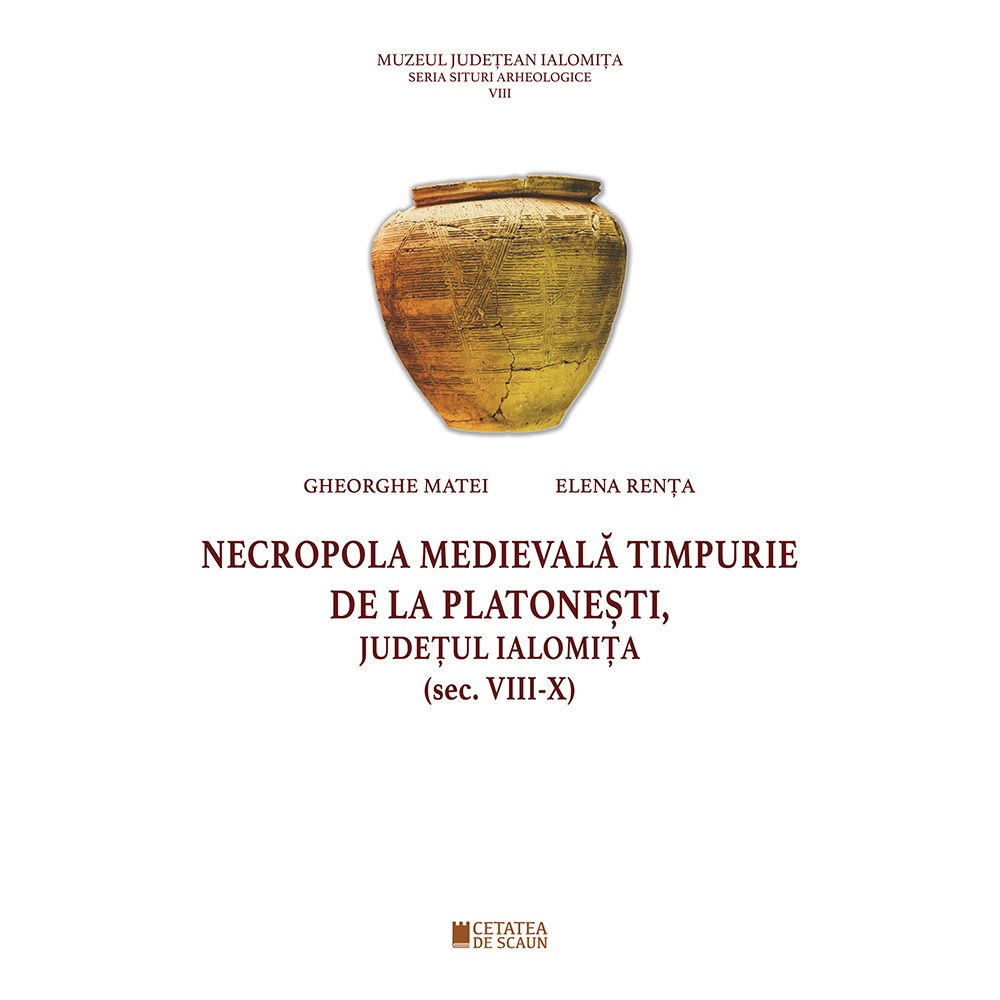
Lucrarea Necropola medievală timpurie de la Platonești, județul Ialomița (sec. VIII-X) aduce în atenția cercetătorilor, dar și a celor interesați de această perioadă istorică, descoperiri arheologice din anii 1990-2002 efectuate de un colectiv de cercetători de la Muzeul Județean Ialomița coordonat de Gheorghe Matei într-o necropolă medievală timpurie situată într-o zonă din preajma râului Ialomița și a Platoului Hagieni, în extremitatea estică a Câmpiei Bărăganului de Sud, parte componentă a marii Câmpii Române care se întinde în întregime în sudul României.
În perioada menționată date despre aceste descoperiri au intrat în circuitul științific prin publicarea rapoartelor anuale de cercetare iar într-o formă restrânsă aceleași descoperiri au fost cuprinse în teza de doctorat Regiunile estice ale Câmpiei Munteniei în secolele VIII-X susținută de Gheorghe Matei la Universitatea Alexandru Ioan Cuza Iași în anul 2003 sub coordonarea prof. dr. Dan Gh. Teodor.
În timpul cercetărilor ne-am bucurat de sprijinul unor cunoscuți medieviști cărora le aducem mulțumiri cu această ocazie: prof. dr. Dan Gh. Teodor, prof. dr., membru al Academiei Române Victor Spinei de la Institutul de Arheologie Iași, prof. dr. Ștefan Olteanu de la Institutul de Arheologie Vasile Pârvan București, prof. dr., membru corespondent al Academiei Române Ionel Cândea de la Universitatea Dunărea de Jos Galați.
Aducem, totodată, mulțumirile noastre celor care ne-au sprijinit în realizarea documentației în vederea publicării descoperirilor: dr. Adrian Ioniță și dr. Oana Damian de la Institutul de Arheologie Vasile Pârvan București, dr. Costel Chiriac de la Institutul de Arheologie Iași, dr. Maria Ordeanu de la Muzeul Național Brukenthal, dr. Sorin-Cristian Ailincăi de la Institutul de Cercetări Eco-Muzeale Tulcea, dr. Anca Păunescu, dr. George Trohani și dr. Irina Ene de la Muzeul Național de Istorie a Romaniei, dr. Cristina Paraschiv Talmațchi de la Muzeul de Istorie Națională și Arheologie Constanța, dr. Bogdan Ciupercă de la Muzeul Județean de Istorie și Arheologie Prahova, dr. Valentin Parnic de la Muzeul Dunării de Jos Călărași, dr. Valeri Iotov de la Muzeul Varna, Bulgaria.
Pe întreaga durată a cercetărilor de teren, dar și ulterior la întocmirea documentației în vederea publicării, ne-au fost alături colegii de la Muzeul Județean Ialomița cărora le aducem, de asemenea, mulțumirile noastre: dr. Florin Vlad, dr. Ioan-Valentin Cernău, dr. Emilia Corbu, dr. Cătălina Cernău, muzeograf Radu Coman, restaurator Simona Munteanu și restaurator Marioara Filip.
Mulțumirile noastre se adresează în același timp și echipei de tehnoredactare compusă din ing. Valentina Rența, ing. Ion Boamfă, Elena Stoica, analist-programator, și Simona Munteanu, restaurator la Muzeul Județean Ialomița, realizatorului copertei și a ilustrației fotografice, dr. Ioan-Valentin Cernău, referentului de specialitate, Bogdan-Cătălin Radu, doamnelor supraveghetoare Anișoara Șerban și Alina Militaru de la Muzeul Județean Ialomița.
ABSTRACT
ABSTRACT
The early medieval necropolis from Platonești (Ialomița county) was located in the southern area of the Ialomița river lower course not far from its flow into the Danube, in a meadow area near the northern limit of the Hagieni Plateau and the eastern neighborhood of the current territory of the Platonesti village.
It was discovered as a result of surface archaeological research carried out in 1990 by Gheorghe Matei and Radu Coman, archaeologists at the Ialomița County Museum, when two early medieval settlements were also identified in the vicinity of the necropolis. The systematic archaeological research, started in the same year and ended in 2002, was coordinated by Gheorghe Matei and the research team included Radu Coman and Simona Munteanu.
The early medieval necropolis from Platonești had a quadrilateral shape, the sides of about 85×67 m, the NE-SW orientation and the surface of about 5700 square meters.
In a period prior to the beginning of the archaeological research, the necropolis had been intersected by an irrigation canal, during the works some graves were destroyed. For the complete research of the necropolis, sections 3 m wide and of variable length were excavated, parallel to the irrigation canal (37) or perpendicular to it (28). Many of the graves had also been affected by the current agricultural works that took place over time. At the base of the layer of plowed soil, about 0.35-0.40 m thick, the archaeological complexes were outlined.
The graves of the early medieval necropolis at Platonești had been organized into four large groups, each of these groups including both cremation and inhumation graves. 531 cremation graves representing 84.55% of the 628 graves, 93 inhumation graves representing 14.78% and four cenotaph graves were found. Out of the 531 cremation graves, 310 were graves with the calcined human bones deposited directly in the pit; in 187 graves the calcined human bones were deposited in urns; in 24 graves the calcined human bones were deposited both in the urn and in the pit, and ten cremation graves had calcined human bones protected by Roman bricks. In the early medieval necropolis from Platonești there were also several cases of overlapping graves: inhumation grave M9 was overlapped by cremation graves M10 and M11, inhumation grave M28 was partially overlapped by cremation grave M25, inhumation grave M159 was overlapped by inhumation grave M160, inhumation grave M229 was partially overlapped by inhumation grave M225, inhumation grave M513 was overlapped by cremation grave M509, inhumation grave M532 was partially overlapped by inhumation grave M531 and inhumation grave M590 was overlapped by cremation graves M586 and M587.
Most of the pits of the 310 cremation graves with calcined human bones deposited directly in the pit had a round-shaped mouth with a diameter between 0.30-0.50 m and a truncated or relatively cylindrical section, deepening into the ground up to about 0.50 -0.60 m. Pits with oval, rectangular, square or rectangular mouths were much less. The bottom was slightly hollowed out and in one case burned beforehand, the burn layer having a thickness of about 5-6 cm in the central part.
Of the 310 cremation graves, 54 had no burial inventory, vessels were discovered in 61 graves, ceramic fragments were discovered in 151, iron knives were found in 99 graves, animal bones from meat offerings were discovered in 48 graves, ornaments and clothing accessories were discovered in 42 graves, tools, fragments and household utensils were found in 30 graves, iron and bronze object fragments that could not be determined were discovered in 23 graves, in two graves fragments of iron links were discovered, in one grave a perforated and illegible bronze coin was found, in one grave a iron battle axe was discovered, two bronze anthropomorphic statuettes were discovered in one grave, adobe fragments were found in 16 graves and vitrified hearth fragments in one grave.
The pits of the 187 cremation graves with calcined human bones deposited in urns mostly had a round-shaped mouth with a diameter between 0.25-0.40 m, a truncated or relatively cylindrical section, and the slightly hollowed bottom was at about 0, 50-0.60 m relative to the current treading level.
The urns were both common vessels (107) and vessels made of good quality paste (83). Two of these graves had two urns each and 14 of the discovered urns had their mouths covered with fragments of vessels or fragments of Roman bricks and bricks. In a number of 72 graves, the urns contained only calcined human bones, and in a number of 116 graves, other deposits were in the urns or outside them. Iron knives were discovered in 55 graves of this type; animal bones from the meat offering were found in 44 graves; ornaments and clothing accessories were discovered in 29 graves; tools, fragments of household tools and utensils were found in 17 graves; vessels were discovered in 14 graves; a saddle ladder was discovered in one grave and objects and fragments of iron objects that could not be determined were found in 11 graves. The funeral inventory had been deposited in the urn (90), in the urn and next to the urn (17) or only next to the urn (9). Of the 24 cremation graves with calcined human bones deposited in the urn and pit, most had round-shaped mouths.
The urns in these graves were high-quality vessels (14) and common-use vessels (11), two urns were discovered in one of the graves, and the urns in three graves were covered with ceramic fragments. The burial inventory had been deposited in the urn (8), in the pit (7) or in both the urn and the pit (5). Iron knives were found in 12 graves, ceramic fragments were found in nine graves, animal bones from meat offerings were found in seven graves, ornaments and clothing accessories were found in six graves, in one grave a common use vessel was discovered and in another two common use vessels. Two iron and bronze fragments could not be determined.
Of the ten graves with calcined human bones protected by Roman bricks, seven had pits with square mouths, two rectangular and one round. Calcined human bones and grave goods, where applicable, were deposited on the brick at the base of the pit. Iron knives were found in five of these graves, common vessels were found in three graves, ceramic fragments were found in two graves and two iron buckles, one animal antler point and one undetermined iron piece fragment were found in one grave.
The 93 inhumation graves, spread across all four groups, had rectangular pits with rounded corners, rectangular, oval, one relatively trapezoidal and straight walls. Two of the pits were provided with a niche each, one of which also had a step, two horsemen’s graves had pits with steps arranged lengthwise and one grave had a step on the northern side. Tomb no. 362 had a pit of a special shape. For depositing the offering, the pit, oriented N-S, was widened in the southern part, acquiring a rectangular shape with right angles.
Among the inhumation graves, 51 were adult graves and 38 were children’s graves, 36 deceased were placed on their back with their arms next to the body and their legs extended, in a few graves the deceased were lying on their back but the position of the arms was different, in nine graves the deceased were in a crouched position and for a number of 35 skeletons the position could not be specified in detail.
More than one third of the inhumations had the N-S orientation, in the case of the other graves the inhumations had different orientations.
Of the 93 inhumation graves, three were disturbed by the irrigation canal, 32 graves had no burial inventory, in the others, the deceased were accompanied by offerings and objects of personal use.
In 35 graves, of which 21 were graves of adults and 14 of children, vessels were discovered, in 15 graves of adults and seven graves of children the meat offering was documented, in five graves, of which three were of adults and two of children ceramic fragments were discovered, knives were discovered in 15 adult graves, buckles were discovered in 11 adult graves, bronze earrings were found in four children’s graves and one adult’s graves, in three children’s graves and one of an adult beads were discovered, in two children’s graves snail necklaces were discovered, in a child’s grave an iron necklace was found, in two children’s graves astragalus were discovered, some of which perforated, and fragments of glass cups were discovered in two other children’s graves. Fragments of iron objects found in a few graves could not be determined.
Of the four cenotaphs discovered in the early medieval necropolis from Platonești, two had rectangular pits oriented N-S and one rectangular, oriented NNE-SSW, in each one a vessel was discovered, in two of the graves next to the vessel animal bones were also found and in one also coals.
The ceramics discovered at the Platonești necropolis belong to both the common use and the good quality category. The category of pots for common use includes jar-vessels (pots without handles) and a cup. The jar-vessels are made on a slow-turning wheel, mostly from paste with sand and crushed gravel in the composition, in rare cases crushed shards or crushed shell are used as degreasers. Burning is oxidizing, usually incomplete, the core having a gray or gray-black color.
From the point of view of the shape, there are two variants: jar-vessels that reach the maximum arching near the neck line and jar-vessels with the point of maximum arching at the middle of the height. The neck of the jar-vessels is short, the mouth is flared and the lip is rounded or chamfered.
The decoration of the jar-vessels, exclusively geometric, consists of incised lines made with combs, arranged circularly, and incised lines or combinations of these ornamental motifs. Several of the jar-vessels are also decorated on the inner edge and a number of 27 vessels have potter’s marks in relief on the bottom in the form of a circle with six or eight rays inside, a circle with a cross inside, a simple circle, concentric circles, square with cross, rectangle with diagonals, cross, compound or simple swastika. In two cases, the jar-vessels are marked with an anthropomorphic and zoomorphic representation, respectively.
Both whole vessels, having the function of offering or urn, as well as ceramic fragments deposited as offerings or covering the mouth of urn vessels, were discovered.
The fine-textured ceramics are made on the slow or fast wheel from good quality paste, predominantly non-oxidizing burn, the vessels having a gray color of various shades and the surfaces polished. Whole vessels were discovered, most of them being used as urns, but also as offering vessels, as well as ceramic fragments deposited as offerings.
Most of the documented vessels are without handles, of the jar-vessel type, of different sizes depending on the destination. Depending on their shape, they fall into two variants: vessels with the maximum diameter at the top and vessels with the maximum diameter at half height. Most have short necks, flared mouths and rounded or bevelled lips and are decorated with polished lines. Decoration with incised lines is less common, sometimes being documented together with polished decoration. On the body of the vessels, the polished lines are arranged in network, vertically or obliquely, in the same direction or in the opposite direction.
Of the good-quality vessels without handles, eight have potter’s marks in relief on the bottom, the circle, alone or in association with crosses or other geometric figures, being the most frequently represented. A single vessel is marked with a cross in relief and on another there is an hourglass.
Compared to vessels without handles, those with handles, used as urns or offerings, are much fewer. The walls of these vessels are arched, the maximum diameter is at half height or at the top, the truncated or cylindrical neck is relatively high, the lip is rounded or straight. Band-shaped handles have neck and shoulder ends and the section is relatively oval. Vessels of this type have gray colored and polished surfaces, three of the vessels discovered being decorated with polished lines in network or with incised circular lines.
In the early medieval necropolis from Platonești, some jugs were also discovered, most of them deposited as offerings in cremation graves with calcined human bones deposited directly in the pit. They are medium or small in size, have well-arched walls, high, truncated or relatively cylindrical necks, flared, lobed or round mouths, rounded or straight lips. The handle, with the upper end on the neck and the base on the shoulder, has a relatively rectangular, oval or tubular section. The grey, burnished surfaces are sometimes decorated with web-like burnished lines, reverse oblique burnished lines, vertical burnished lines, grooved circular lines, and burnished incised lines, motifs that also appear in association. Two jugs are marked on the bottom with a circle in relief and one has a mark in the form of a superficially incised cross.
The few specimens of bowls and plates from the early medieval necropolis at Platonești, found exclusively in a fragmentary state, document a type of vessel with a truncated conical shape and a wide opening. A single specimen, later completed, is provided with a tall truncated support (foot).
Imported pottery is attested by a fragmented and incomplete cup. This cup, with analogues in the Sultana necropolis, Călăraşi county, is part of the group of yellow ceramics specific to the Slavic-Avar environment in Pannonia and the neighboring areas and dates back to the second half of the 8th century. It has a slightly inward arched bottom, thin and well-arched walls, maximum diameter at half height, short neck, thinned and rounded edge and the handle is placed vertically in the middle area. The surfaces are yellowish and polished and the outer one has a decoration composed of horizontal grooves at the top starting from the handle.
Among the household tools and instruments from the early medieval necropolis at Platonești, knives occupy an important place. The 176 iron knives were discovered in both cremation and inhumation graves. Knives with hilts have been documented as well as knives with a thorn that attaches to the handle. The knife blades have a length of 8-12 cm and a blade width of about 2-2.5 cm.
Sickles and fragments of iron sickles were discovered in four cremation graves. In addition to the knives and sickles, iron hoops from wooden buckets, fragments of iron handles from wooden buckets and their fastening appliqués, an iron amanar, fragments of an iron chain, an iron spoon were also found, a bone handle, bone needle tubes, an antler handle, fragments of glassware and flint splinters.
The adornments and clothing accessories discovered in the early medieval necropolis at Platonești are made of bronze, iron and rarely silver. The predominant type of earring in the Platonești necropolis is composed of an oval link on which a pendant was hung. The earrings found in 17 of the cremation graves had the pendant consisting of round or oval bronze pearls strung on a bronze wire. Important for the dating of the early medieval necropolis from Platonești is the bronze earring with a star pendant that chronologically falls between the end of the 8th century and the beginning of the next. Simple link earrings, earrings with a ring on the link, bronze wire wrapped link earrings, earrings with an amber bead on the link, and earrings with a spiral end have also been documented.
Among the ornaments discovered in the Platonești necropolis was also a temple ring made of bronze and the slightly worn ends. From the category of neck ornaments glass beads of different shapes, sizes and colors were discovered in 17 cremation graves and five inhumation graves. Also from this category were documented iron, bronze or gastropods shell necklaces and pendants.
From the category of ornaments worn on the hand, several bracelets were discovered, three of which were bronze and one of iron, and a bronze ring. The bronze bracelets discovered at Platonești are in the form of a band with widths between 1.4-1.8 cm and open ends. One of these bracelets is decorated with short oblique incisions arranged in longitudinal rows. The other bracelet, made of iron, has a circular section. The bronze ring, in the form of a 0.4 cm wide band, has open ends and is decorated with two slightly indented lines arranged lengthwise on the edge.
Bronze appliqués were discovered in four of the necropolis’ cremation graves. One of these has an oval-elongate shape, a convex face decorated on the edge and two mounting feet on a support, probably of leather. The other three bronze appliqués are in the form of bent sheet metal and were fastened with rivets to a support, probably also made of leather.
In 51 cremation and inhumation graves, buckles made of iron and in fewer cases of bronze were found. Two buckles were found in several of the graves. They are round and rectangular in shape and some still retain the needle. Among the discovered bronze buckles, one has the shape of a lyre and by analogy with the lyre-shaped buckle discovered at Târgșor, Prahova county, it dates back to the 10th century.
In the pit of a cremation grave from Platonești, a belt tongue specific to the populations of nomadic horsemen was also discovered. The piece has a rectangular shape (2.8×1.8 cm), is made of bronze and has a rounded end, the other end being provided with two mounting lugs. It is decorated with four raised waterfowl heads arranged in a lyre shape and surrounded by a raised border. For fixing to the support it has five or six riveting holes.
Among the items of clothing and jewelry discovered in the early medieval necropolis from Platonești, we also mention a bronze needle with a ring-shaped end, probably used to support the garments, a bronze button and a piece made of bone.
Weapons and grave goods specific to horseman graves were found in few graves. Two swords, an axe, a three-edged arrowhead, a saddle-ladder, a whip-ring, a cannon bit and some fragments of chain-links were discovered.
The two iron swords were discovered in two adult inhumation graves, with the deceased lying on their backs, oriented E-W and accompanied by horses. One of the swords has a blade length of 69 cm, the other 69.5 cm, both retaining traces of wood from the hilt and scabbard.
The iron axe discovered in a cremation grave falls chronologically between the 9th and 10th centuries, and a slightly later date is also accepted. A chronological indicator for the early medieval necropolis at Platonești is also the three-edged bronze arrowhead discovered in a child burial grave.
In two cremation graves, fragments of iron links with traces of fire were discovered, and also in a cremation grave, a whip ring was found. Other pieces that can be linked to horsemen’s graves are an iron cannon bit and an iron saddle ladder discovered in a fragmentary state. A bronze discoid appliqué can also be placed in connection with such graves.
Two anthropomorphic bronze statuettes were discovered in a cremation grave with calcined human bones deposited directly in the pit. One of the two statuettes, with a height of 5.3 cm, represents a man with a bulging forehead, prominent cheekbones and arms at his side slightly apart. The right arm is in the normal position but the fingers are missing, the left arm is twisted, with the elbow facing forward and the palm only has the opposable finger. The place of the breasts and the sex are marked on the torso. The left leg has a normal position, that of walking forward, but the right leg is oppositely oriented, twisted. The femurs are far apart and the shins descend in a vertical position. The second anthropomorphic bronze statuette, 3.3 cm high, represents the body of a bearded and moustached man with a headdress typical of a high prelate. The eyeballs, nose and mouth are marked on the face and the ears on the sides. The both anthropomorphic bronze statuettes discovered at the Platonești necropolis have no analogues in the early medieval finds from the Lower Danube.
From the funerary inventory of some graves at the necropolis of Platoști were also iron rings, iron magnifying glasses, fragments of an iron bar and band, an iron and a bronze sleeve, bronze rings, a perforated bronze coin, illegible, perforated and non-perforated astragalus, an animal antler and an animal antler point, adobe fragments, hearth fragments and brick fragments.
The early medieval civilization of the Bărăganului Plain is an integral part of the great early medieval Danubian-Carpatho-Pontic civilization or the Dridu-type culture, developed by sedentary Romanic communities, having as their main occupations the plants cultivation and animal husbandry, the early medieval necropolis from Platonești, Ialomița county being one of the necropolises that belonged to these communities, the chronological markers indicating its beginnings in the second half of the 8th century and its use over two centuries.